Built for the new search.
Trained on the old one.
I’m Apinat Phosuwan, Eight years in SEO. Two years rebuilding it for AI search. Co-Founder at Converzilla, instructor at DPU · Thammasat · PIM. This page is the short version of how I got here — and the deep version of what I actually do now.
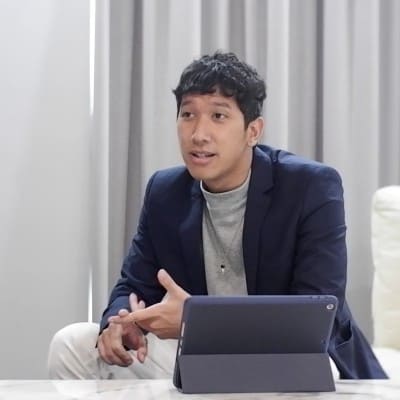
Me?
Apinat Phosuwan or Tylers
SEO operator, instructor, founder.
I help brands and operators figure out how AI sees them — and build the search, content, entity, and authority systems that make them easier to find, trust, and recommend.
I run Converzilla as Co-Founder. I also teach the practice — at Dhurakij Pundit University, Thammasat, PIM, ONDE, and inside corporate marketing teams.
The long version.
“I started in SEO because the puzzle interested me. I stayed because the puzzle keeps changing — and the new one is bigger.”
I came in through digital ops — VARP Event, then Backyard Co.,Ltd as a marketing planner. In 2019, I learned SEO by myself and I founded A Little SEO and earned the Google Digital Marketing + UC Davis SEO Specialization certifications. The clients followed.
I started my own SEO training camp, teach and learn SEO from community and we have a great vibe
For three years I ran in-house strategy across hospitals, property, and consulting — later expanding into SEO consulting through projects like Accounting, Edtech, Healthcare Industry or even Commodity brand, for example QSG Consult, SmartMathPro, ForwardEnglish, Princhealth, etc.. Started teaching at DPU, Thammasat, PIM. Co-founded Converzilla in 2022.
When LLMs broke the search model, I rewrote the practice. Two years on retrieval, citations, and entity authority. GenAI for SEO / AEO / LLM certified May 2026. The five-anchor system is what I run with clients now.
From event ops to AI search.
Operations → Marketing
VARP Event · Backyard Co.,Ltd. Learned SEO and analytics on the data side. Founded A Little SEO. Google Digital Marketing + UC Davis SEO certified.
In-house strategist
Princ Hospital, Thonburi Bangsue, Property Perfect, QSG Consult. Three industries. Started teaching at DPU, Thammasat, PIM, Reinvent Academy.
Co-Founded Converzilla
Built the agency around the framework. Launched 13x Rank Rocket SEO workshop. Led ONDE’s Digi Influe TikTok program in 2024.
AI search, the rewrite
Repositioned everything around how LLMs retrieve, cite, and recommend. GenAI for SEO/AEO/LLM certified May 2026. Five-anchor system in production with clients.
Three layers. One discipline.
I work across three layers of search visibility — and each one needs a different playbook. SEO got me here. AEO is the bridge. LLMO is where the new revenue lives.
The foundation. Still mandatory.
Crawl, index, rank. The mechanics that have to work before anything else can.
SEO is where I started — Google Digital Marketing certified June 2019, UC Davis SEO Specialization August 2019. Six years running it in-house for hospitals (Princ, Thonburi Bangsue), property (Property Perfect), consulting (QSG), and through Converzilla.
Every brand I touch still needs the SEO layer working. Broken robots, slow render, weak internal linking — none of the new AI work matters if a site can’t get crawled in the first place. I treat SEO as the floor, not the ceiling.
- Crawl budget & log analysis
- JS render parity for bots
- Internal linking as a graph
- Schema.org full coverage
- Core Web Vitals at scale
- Topic clusters & pillar pages
- Buyer-intent keyword research
- E-E-A-T author programs
- Off-page authority building
- 13x Rank Rocket framework
The bridge. Where answers live.
Featured snippets, AI Overviews, knowledge panels. The surfaces between ten-blue-links and full LLM answers.
AEO is what most teams confuse with “AI SEO.” It’s the layer where Google’s AI Overviews, Perplexity’s citations, and Bing’s answer box all pull from. Entity-first, not keyword-first.
This is also where structure pays the most: a single missing Organization schema can keep a brand out of every answer surface. I build the entity graph deliberately — your site, your knowledge panel, your Wikidata entry, your third-party profiles, all describing you the same way.
- Schema.org full coverage
- Knowledge graph alignment
- Wikidata + Wikipedia work
- Author & expertise markup
- NAP consistency across web
- TL;DR + structured answers
- Comparison & “best-of” pages
- FAQ & HowTo at intent
- Featured snippet capture
- AI Overview targeting
The new revenue layer. Where AI recommends.
ChatGPT, Gemini, Perplexity, Claude. The surfaces that already replaced “search” for a generation of buyers.
LLMO is the work that didn’t exist three years ago. I earned the GenAI for SEO / AEO / LLM certification in May 2026 and have been running this layer with clients since 2024. The questions are different here: not “do I rank?” but “does the model name me?”
The mechanics: get cited in the sources the LLM already trusts (Reddit, YouTube, news, expert-led blogs). Make the content lift-friendly so a model can quote a passage and cite back. Track what the AIs say about your brand — weekly, not quarterly. That’s the whole game.
- Prompt-suite visibility audits
- Citation source-mapping
- Retrieval-friendly content build
- Reddit + YouTube authority plays
- 3rd-party PR for LLM trust
- Weekly LLM scorecard
- Share-of-answer by surface
- Branded vs unbranded prompt tests
- Citation count tracking
- Entity recognition accuracy
Five rules I actually work by.
Not slogans. These are the things I check against every time I’m about to recommend something, write something, or ship something.
Frameworks beat opinions.
The field moves fast. Systems survive; hot takes don’t. Build the scaffolding before you fill in the content.
Recommendation > ranking.
Being on page one is a 2010 success metric. Being the answer the AI hands back is the new one.
Plain language, every time.
If a busy founder can’t act on what I just said, I haven’t said it well enough yet.
Measure or it didn’t happen.
AI visibility is trackable. If your work isn’t measured weekly across every surface, it’s not finished.
Stay human, stay specific.
Generic content is invisible. Specific, human content is what AI cites — and what humans trust.
Teach what you ship.
The best way to know if a framework works is to teach it. Every workshop sharpens the model.